glacier mother iceberg child


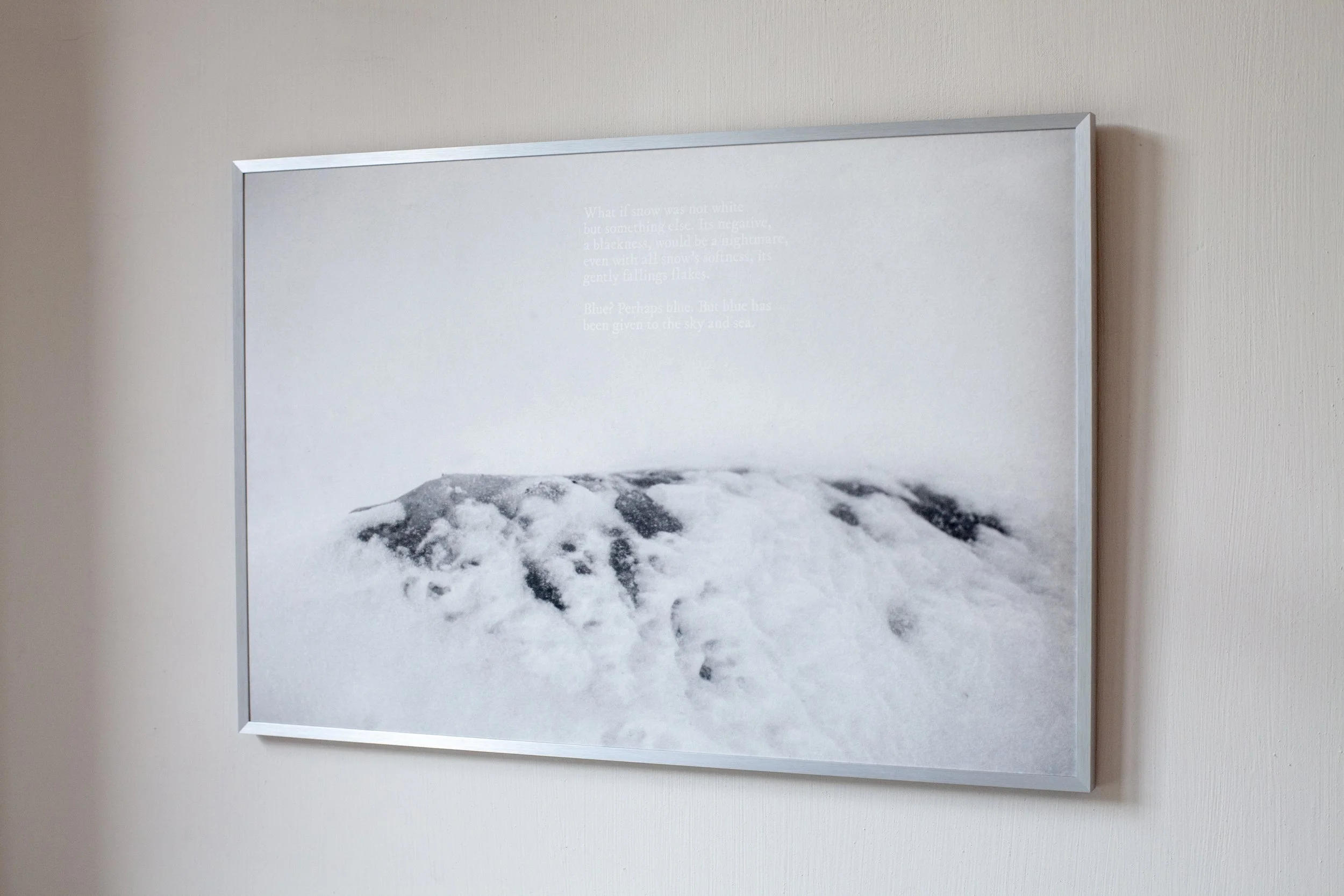
My work glacier mother iceberg child originated during an expedition residency on a ship around Svalbard, the high-Arctic archipelago. The images, experiences, and observations I brought back from this journey are evolving into image-text works in which I connect overwhelming natural phenomena —such as calving glaciers and drifting icebergs— with personal observations and memories, such as birth and motherhood.
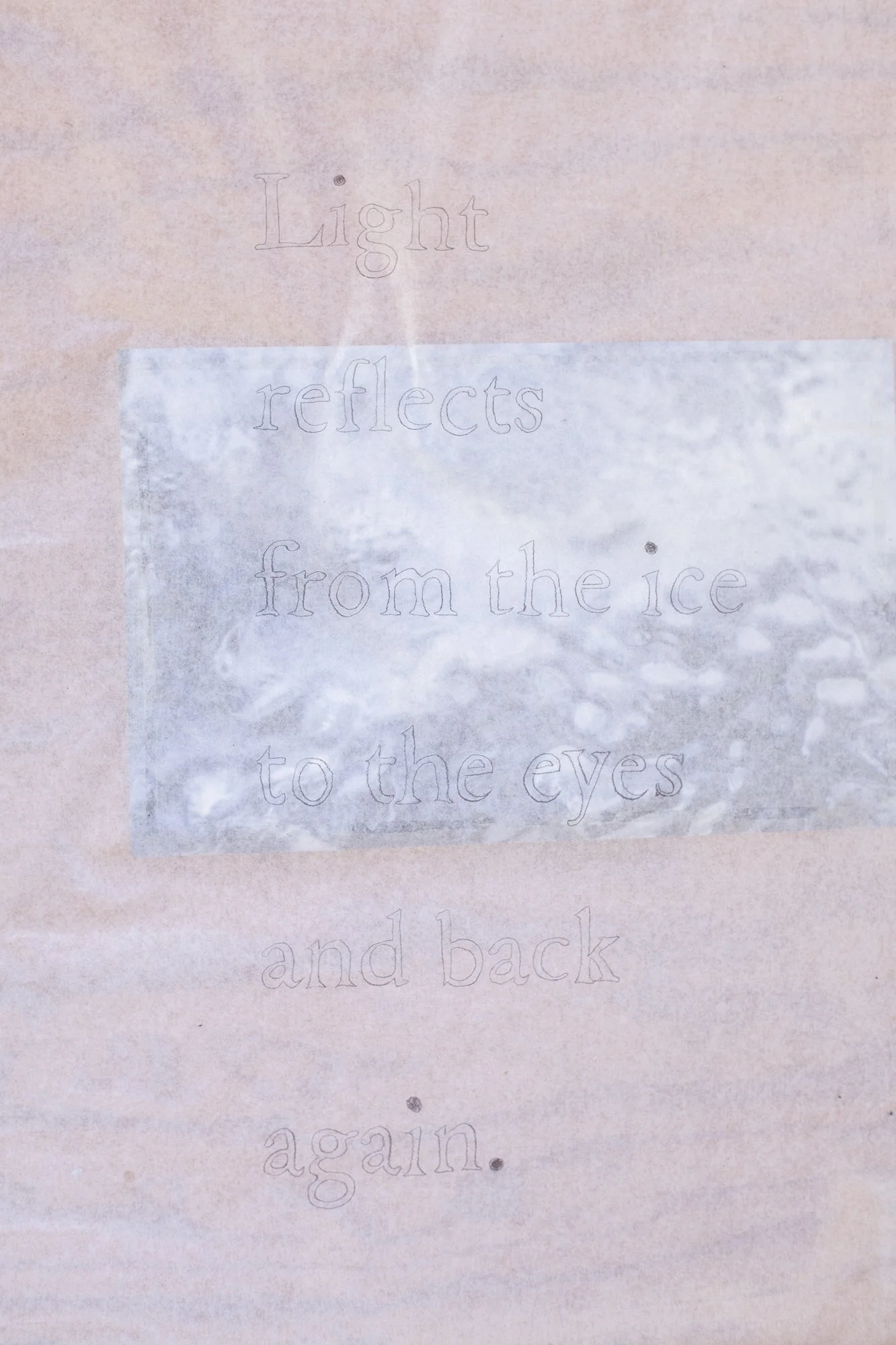
I write texts that exist somewhere between short essayistic pieces and poems. My texts address subjects such as the categorisation of glaciers as ‘dead’ or ‘alive’, the fact that all ice you touch melts slightly, and how the eyes of reindeer change colour depending on the season. I connect this to my own position as an artist, mother, and observer.
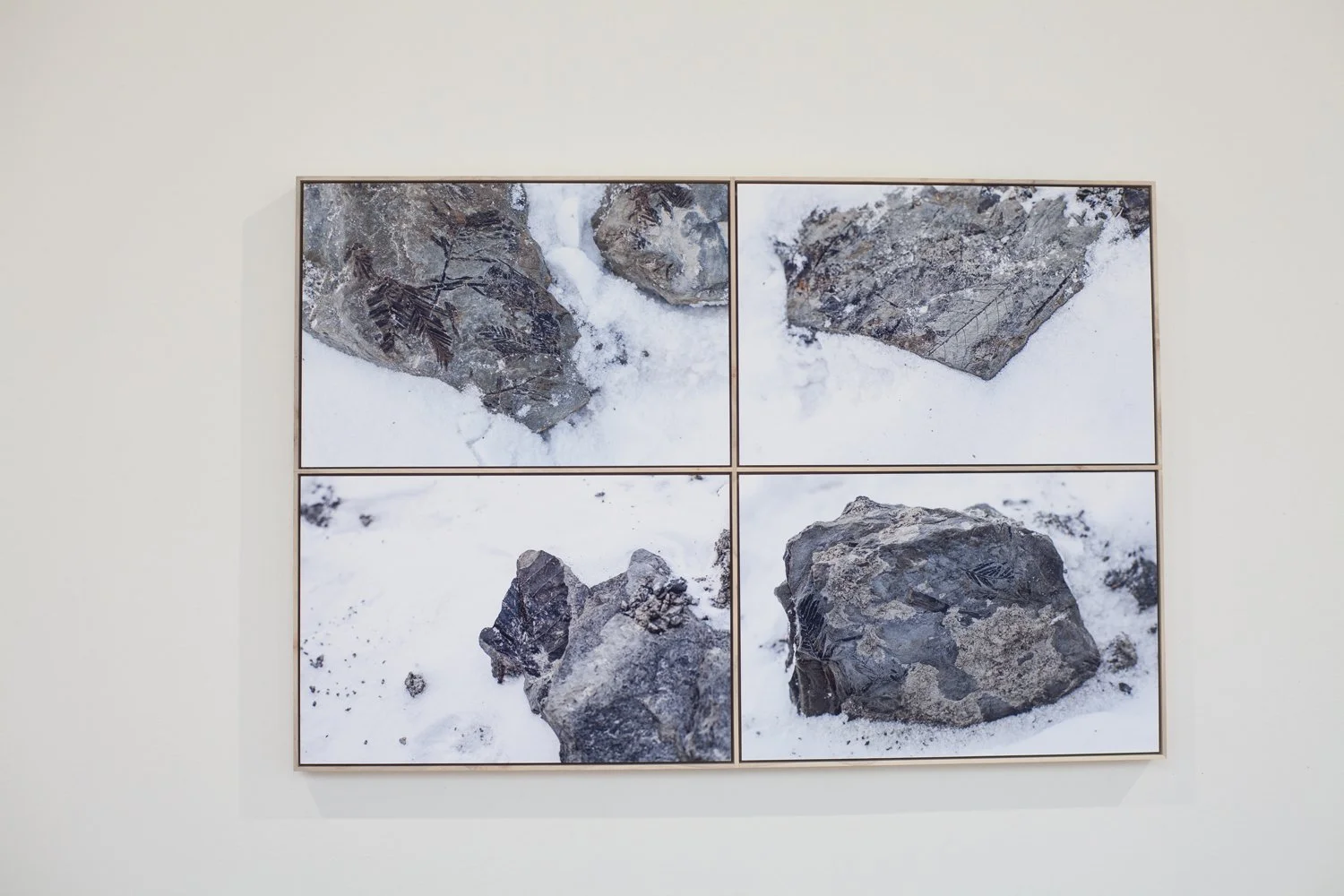
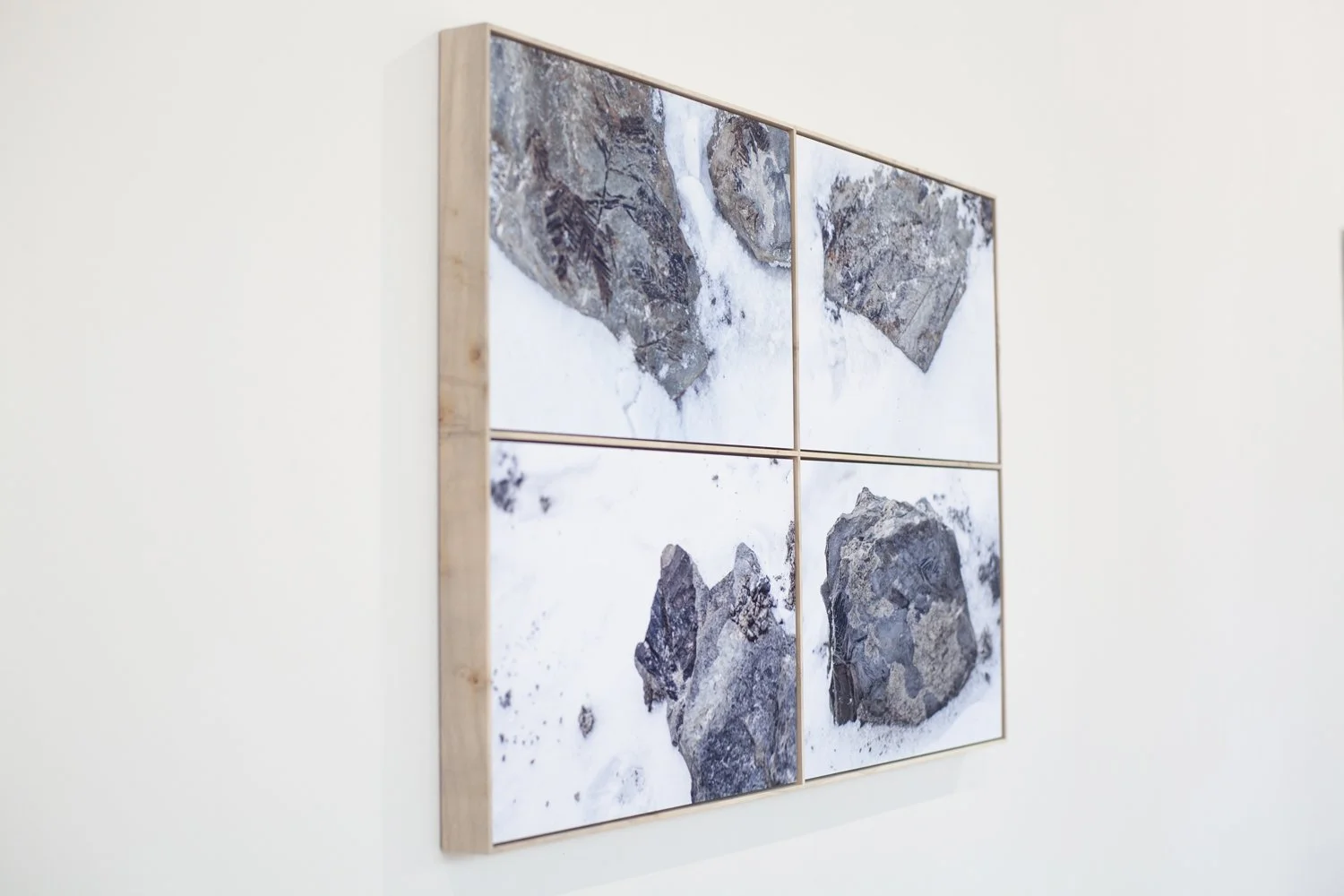
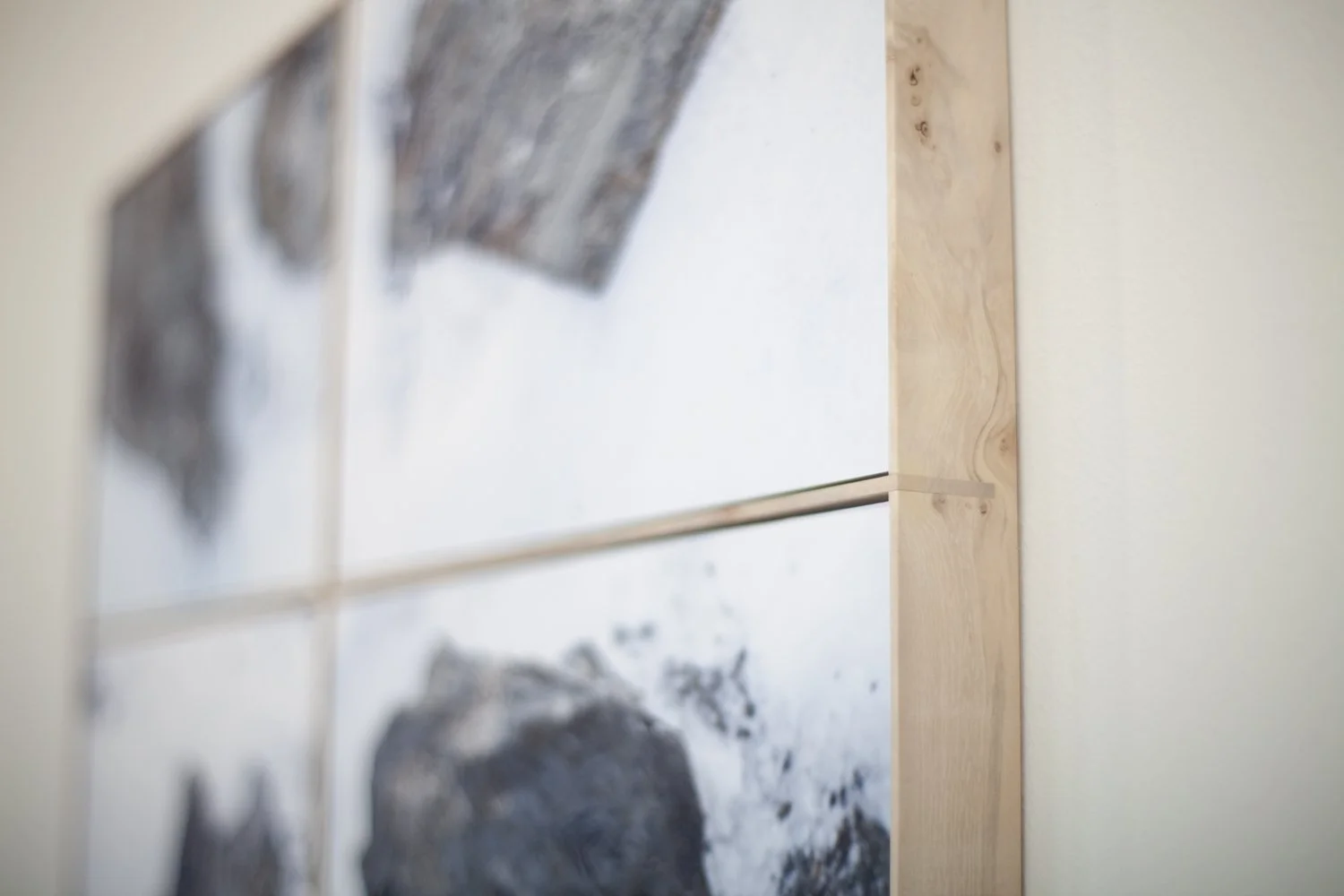
I combine these texts with photographs: an iceberg of an unimaginable shade of blue; a fossil in which leaves are still recognisable, on an island where no trees grow anymore; algae in a hot spring. In exhibitions, these works take on new forms each time. I have presented texts as prints alongside photographs; at other times, the words were embedded within the images themselves; and in another instance, a poem spread across the walls of an exhibition space while photographs formed an installation on a table. In the most recent version, I wrote the texts in large format on many metres of paper hanging from the high ceiling to the floor, interrupted by photographic prints.
With this work, I speak —usually indirectly— about the loss of landscape and the grief that accompanies it. I strongly believe in the power of small observations and personal stories rather than grand statements and large numbers. The viewer can draw their own connections, and I invite them to feel rather than to know.
Part of glacier mother iceberg child is also a video work in which my hands examine a piece of glacier ice as though touching a treasure. It is an encounter between something human and something non-human. The touch ends abruptly; the skin turns red. What appears to be a tender gesture simultaneously proves to be a painful test of endurance. Although my fingertips later grew new skin, my warm touch inevitably accelerated the melting of this piece of ice.